
Gyan Management


Kulwinder Singh1  , Kiran Kumari1 and Navneet Kaur1
1University Business School, Panjab University, Chandigarh, India

Creative Commons Non Commercial CC BY-NC: This article is distributed under the terms of the Creative Commons Attribution-NonCommercial 4.0 License (http://www.creativecommons.org/licenses/by-nc/4.0/) which permits non-Commercial use, reproduction and distribution of the work without further permission provided the original work is attributed.
Given that there is no bibliometric study exhibiting dynamics of industrialization research, the present study conducts its comprehensive bibliometric analysis and maps its conceptual structure on the basis of 1,377 journal documents published between 2000 and 2025 and sourced from the Scopus database. The study’s findings reveal a sharp increase in scholarly contributions on industrialization over the past two decades, with the United States and Spain leading in terms of both volume and impact. At the level of authorship, prominent authors, namely Merigo JM, Porter AL and Kostoff RN, emerge as central figures, collectively shaping a large portion of the field. Journals, namely Technological Forecasting and Social Change and Research Policy, provide the maximum and most frequent publication outlets. Six main subject clusters, including innovation, industrial policy, sustainability, Industry 4.0, economic changes and market competition, structure the conceptual frameworks of the industrialization research, showing its development from conventional mechanization to sophisticated automation and finally to the new paradigm of sustainable industrialization. The study emphasizes that future research should critically assess policy effectiveness, technological transitions and sustainability strategies to build resilient, innovative and green industrial ecosystems across diverse economies.
Industrialization, industrial policy, industrial sector, innovation and sustainability
Introduction
Industrialization is a key driver of economic growth and national development, fostering increased productivity, job creation and technological advancements (Ahluwalia, 2002). It represents a transformative shift from agrarian economies to large-scale manufacturing, mechanization and urbanization, significantly shaping societies worldwide. This transformative shift began with the Industrial Revolution in the late 18th century and has led to exponential growth in production processes, construction, transportation, employment and technological advancements (Athukorala & Jayasuriya, 2000). The Industrial Revolution played an important part in constructing modern economies, as indicated by the transformation of countries such as the United States, Germany, Japan and China becoming economic powerhouses through persistent industrial expansion (Butlin, 1986; Franck & Galor, 2021). These modern economies introduced economic reforms which led to rapid industrialization, soaring GDP growth, lower poverty and improved production (Dutta, 2005; Klein, 1996). China introduced these reforms after the Second World War, beginning with agricultural changes in 1978, leading to rapid industrialization. South Korea’s rapid industrialization, driven by a shift from import substitution to export-led growth, boosted GDP by 7.5% annually, expanded manufacturing exports and reduced inequality through government welfare programmes (Kniivilä, 2007; Noland & Pack, 2003). On the other hand, Japan’s industrialization was driven by small-scale firms, electrification and a blend of modern and traditional technologies (Minami, 1984). Singapore’s swift GDP expansion, propelled by foreign direct investment, reliance on exports and educational programmes, has elevated it to one of the world’s wealthiest nations despite its scarce natural resources (Krugman, 1994; Vu, 2011). While the government of India brought agricultural reforms and introduced industrial policies to strengthen industries. This has led to employment generation, reduction in income inequality and poverty reduction. After 1991, foreign investment was also welcomed, which significantly resulted in a decrease in trade tariffs. All such efforts played a vital role in industry development, and large-scale industries have always benefited from the backing of smaller industries (Kumari, 2015).
Building on this basis, industrialization has continued to change around the world in different phases, reflecting changes in economic models, environmental consciousness and technology. Often referred to as Industry 1.0, the first stage concentrated on steam and water-powered machinery. Following this was Industry 2.0, which was characterized by assembly lines and mass production made possible by electricity. Industry 3.0 emerged in the middle of the 20th century, revolutionizing scalability and efficiency through automation, electronics and information technology. Industry 4.0, which integrates cyber-physical systems, the Internet of Things (IoT), artificial intelligence and data analytics, is bringing forth smart manufacturing (Duan et al., 2024). As nations adapt to these shifts, the focus shifts from merely raising productivity to moral business practices that balance economic advancement with social and environmental well-being. This pattern demonstrates how industrialization is no longer only a strategy for achieving economic domination but is now necessary to achieve long-term sustainable development on a global scale (Zhou et al., 2022).
Historically, industrialization has changed over time through waves that were marked by electricity, steam power, digital technology and, more recently, automation and artificial intelligence. These waves have together redefined paradigms for global development. There are a large number of studies explaining this journey of industrialization worldwide, and a wide range of topics have been the subject of industrialization research, including the impact of industrialization on economic growth, its contribution to international trade, the effects of unbridled industrial growth on environmental damage and its effects on governance and public policy. Furthermore, the study of industrialization has gained new dimensions of interest with the advent of the Sustainable Development Goals (SDGs), especially Goal 9: ‘Industry, Innovation and Infrastructure’, which places a greater emphasis on inclusive and sustainable industrial growth (Govindan et al., 2020).
With the extensive body of research on industrialization, this field of study is still widely scattered among areas like development studies, economics, technology, policy and environmental studies. Because of this fragmentation, it is challenging to track the development of ideas, the dominant themes in the subject, the institutions and locations influencing the industrialization discourses, and the areas where knowledge gaps still exist. Further, the absence of a cohesive knowledge map makes it more difficult to understand the conceptual framework of the subject. Although there are many narrative reviews and topic studies, they frequently concentrate on just one key area or the other. Thus, the entire spectrum of industrialization research has not yet been properly mapped. Moreover, no other bibliometric study had simultaneously examined industrialization across the three dimensions of mechanization, sustainability and Industry 4.0. In this view, there is a dire need for a bibliometric analysis to systematically assemble and depict the vast and scattered corpus of industrialization literature and its conceptual structure. In this context, this article conducts a bibliometric analysis of scholarly literature on industrialization and identifies the most productive and influential authors and countries, highlights the key journals publishing in this area over time and maps the conceptual structure of industrialization research. This research is significant for academicians, researchers and policymakers as it does not merely catalogue the existing literature but critically assesses how research on industrialization has developed, how it is interconnected and where it may be heading. The research is highly relevant in the face of global challenges such as climate change, geopolitical shifts and digital transformation, which the industrialization is facing both in the Global North and Global South.
This article is structured into five broad sections. The first section introduces the research problem and outlines the need, significance and relevance of the study. The second section describes methodological and data-related issues. The results and discussion on bibliometric analysis are presented in the third section in detail, and the fourth section details the future research in the field of industrialization. Lastly, the fifth section concludes the findings of the study and draws policy implications.
Methodology and Data
In the present study, a bibliometric analysis of industrialization research has been executed on studies published between 2000 and 2025. Scopus provides access to leading journal articles, references and publication details required for bibliometric studies. Thus, Scopus was used as the primary source in this study for data collection because the majority of the sources in Scopus and Web of Science are similar. This article analyses the trends and patterns of industrialization research by employing various bibliometric analytical tools. The comprehensive science mapping analysis has been applied to documents extracted from the Scopus database. Using the seminal papers/documents extracted from the Scopus database, this article conducts performance analysis and applies ‘keyword co-occurrence analysis’ and ‘thematic-evolution analysis’ to map the domain’s intellectual and conceptual structure. The study utilizes the Bibliometrix package in Studio and Biblioshiny (Aria & Cuccurullo, 2017) for these analyses. Furthermore, VOSviewer (Van Eck & Waltman, 2010) has been employed to create visualization networks. The software tools used in this study are well-acknowledged and often utilized by scholars performing bibliometric analyses.
Process of Data Extraction Pertaining to Industrialization Research
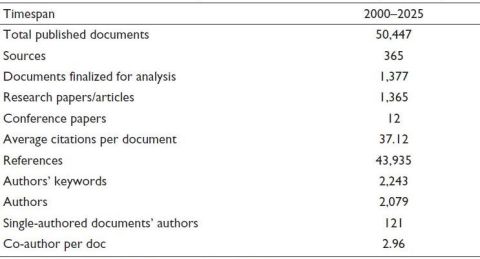
For extracting data for bibliometric analysis on industrialization research, the following search queries were entered in the Scopus database: TITLE-ABS-KEY (‘economic reforms’ OR ‘industrial policy’ OR ‘industrial sector’). This search yielded 50,447 publications and 1,377 documents, including 1,365 research papers and 12 conference papers were finalized for analysis. The selection procedure, including the inclusion and exclusion criteria for research studies, has been depicted in Figure 1. The publication outcomes were exported in text format, including detailed citation information, bibliographic details, abstracts and keywords, to facilitate further analysis.
Results and Discussion
General Information of the Corpus of Industrialization Research (2000–2025)
The summary statistics of the bibliometric metadata of 1,377 documents, including articles (n = 1,365) and conference papers (n = 12) published between 2000 and 2025, are presented in Table 1. These articles were sourced from 520 different sources, with 1,365 articles produced by these sources, with an average citation count of 37.12. The collaboration of researchers in the industrialization domain was demonstrated by the utilization of 43,935 references and 2,243 keywords across publications produced by 2,079 authors. There were 2,079 authors producing research outcomes; of these, there were 121 single authors, and the number of co-authors per document was 2.96.

Table 1. Characteristics of the Corpus of Industrialization Research (2000–2025).
Source: Generated by the authors using the Scopus database.
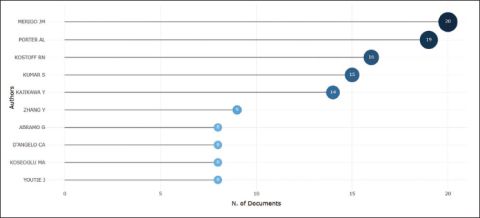
Figure 1. Prolific Authors in Research on Industrialization (2000–2025).
Source: Generated by the authors using the Scopus database.
Prominent Authors in Research on Industrialization and Their Impact (2000–2025)
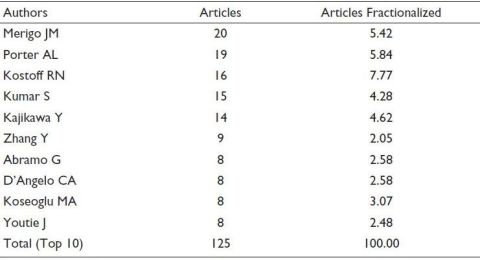
Figure 1 represents the information of authors working on industrialization research during 2000–2025. The fractionalized articles column provides a more accurate measure of each author’s individual impact by accounting for shared authorship. Merigo JM stood out as the top contributor with 20 articles and a fractionalized article count of 5.42, indicating a strong presence even when co-authorship was considered. Merigo JM was followed by Porter AL with 19 articles (fractionalized count 5.84) and Kostoff RN with 16 articles, who actually had the highest fractionalized score of 7.77, meaning he often contributed more substantially to each article he co-authored. Kumar S, Kajikawa Y and Zhang Y, among others, were other notable contributors. Overall, Table 2 and its accompanying explanation establish Merigo JM, Porter AL, Kostoff RN, Kumar S and Kajikawa Y as the top five prominent authors in industrialization research.
Relevant Sources for Industrialization Research (2000–2025)
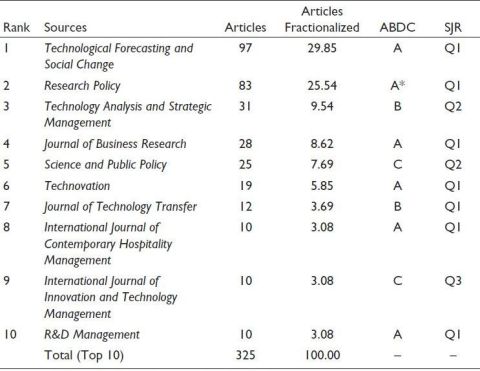
The leading journals contributing to industrialization research, ranked by articles, are presented in Table 3 and Figure 2. The most productive journals in the domain of industrialization research were Technological Forecasting and Social Change (n = 97), followed by Research Policy (n = 83), Technology Analysis and Strategic Management (n = 31), Journal of Business Research (n = 28), Science and Public Policy (n = 25) and Technovation (n = 19).
This table presents the top 10 journals that have published the highest number of research articles on the topics of and related to industrialization. It includes five key columns: the journal name (Sources), the number of articles published (Articles), articles fractionalized, the journal’s quality rating as per the Australian Business Deans Council (ABDC) and the SC Imago Journal Rank (SJR), which shows the journal’s scientific influence. The journal Technological Forecasting and Social Change ranked first with 97 articles (maximum fractionalized count 29.85) and held a high-quality ranking of A in ABDC and Q1 in SJR, indicating it was both prolific and influential in providing research output on industrialization research. Research Policy followed with 83 articles (fractionalized count 25.54) and had the highest ABDC rating of A*. Most of the top journals in the list have Q1 SJR rankings, showing they were among the most prestigious in their fields. While some journals like Science and Public Policy and International Journal of Innovation and Technology Management had lower ABDC ratings (C) or SJR ranks (Q2 or Q3), they still contributed significantly to industrialization research. Overall, Table 3 and its accompanying explanation establish Technological Forecasting and Social Change and Research Policy as the prominent and impactful journals contributing more than 50% of the research output of the top ten journals on industrialization research.
Table 2. Prominent Authors in Industrialization Research (2000–2025).
Source: Generated by the authors using the Scopus database.
Table 3. Most Prolific Journals in Research on Industrialization (2000–2025).
Source: Generated by the authors using the Scopus database.
Note: ABDC: Australian Business Deans Council; SJR 203: SC Imago Journal Rank.
Figure 2. Most Prolific Journals in Research on Industrialization (2000–2025).

Source: Generated by the authors using the Scopus database.
Most Cited Countries in Industrialization Research (2000–2025)
Table 4 presents a comparative overview of the top ten countries contributing to scholarly research based on total citations and average citations per article. In the context of the most cited countries, the United States, followed by Spain and the United Kingdom, had the highest number of scholarly publications (Table 4). The United States led industrialization research worldwide, with 8,896 total citations and an average of 60.90 citations per article, accounting for 36.7% of the total citations among the top ten countries. Spain and the United Kingdom followed, contributing 11.73% and 8.84% respectively, while maintaining strong average citation rates, indicating consistent research impact. The Netherlands stood out with one of the highest average citations per article at 68.10, despite having slightly fewer total citations than the United Kingdom and Spain. China showed a strong presence in terms of volume (1,939 citations) but had a comparatively lower average of 23.10 citations per article, suggesting high research output but moderate impact per paper. Notably, Slovenia, despite having fewer total citations, demonstrated exceptional research quality with the highest average citations per article (157.10), reflecting the influence of a smaller but highly impactful body of work. Overall, these data in Table 4 establish the United States, Spain, the United Kingdom, the Netherlands and China as the top-five countries leading industrialization research. This finding highlights the dominance of developed nations in research visibility and impact, while also emphasizing the notable efficiency of countries like Slovenia in producing high-impact scholarly contributions (Figure 3).
Table 4. Most Cited Countries in Industrialization Research (2000–2025).
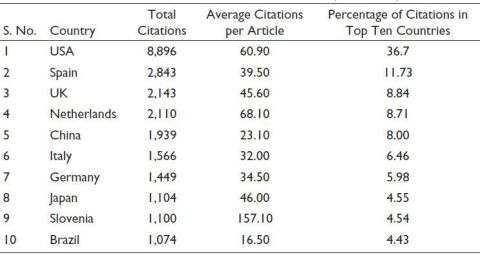
Source: Generated by the authors using the Scopus database.
Figure 3. Most Cited Countries in Research on Industrialization (2000–2025).

Source: Generated by the authors using the Scopus database
Figure 4. A Screenshot of the Bibliometric Map Created Based on Keywords Co-occurrence Analysis.

Source: VOSviewer.
Keyword Co-occurrence Analysis of Industrialization Research (2000–2025)
Under keyword co-occurrence analysis, words that share conceptual or contextual similarities are aligned and grouped into clusters, each representing a distinct thematic area of study. This process enables researchers to visualize the intellectual structure of a field, revealing how different topics are interconnected and how research focus has evolved over time. To carry out the keyword co-occurrence analysis, we set a minimum inclusion criterion of eight occurrences for each specified keyword. As a result, 167 keywords satisfied the threshold criterion from 2,243 author keywords. Figure 4 illustrates the keyword co-occurrence map. The result map delineates six groups of keywords: Cluster 1 (red) contains 128 keywords, Cluster 2 (green) encompasses 112 keywords, Cluster 3 (blue) includes 63 keywords, Cluster 4 (yellow) consists of 61 keywords, Cluster 5 (purple) has 31 keywords and Cluster 6 (orange) has 21 items. These research clusters illustrate the conceptual structure of the industrialization research domain.
Cluster 1: Industrial Sector and Environmental Aspects
This cluster represents one of the key thematic areas that have emerged from past studies in the field, focusing on the industrial sector’s internal structure and its environmental implications. The presence of core keywords such as industrial sector, investments, industrial research, environmental management, emission control and greenhouse gases reflects how scholarly attention increasingly focuses on the industrial sector’s internal structure and its environmental implications, representing a crucial and evolving theme in contemporary industrialization discourse. In view of escalating global climate pledges and environmental, social and governance indicators, the increased focus on energy use, resource efficiency and economic elements demonstrates a dual concern for ecological responsibility and operational productivity. This cluster also highlights the ways in which industrial systems are evolving to align with the principles of green growth, circular economy and low-carbon development. According to Dai et al. (2023) and Li et al. (2022), businesses adapt to global competition and regulatory constraints, and technological innovation is being incorporated more and more to lower emissions and provide cleaner products. These studies highlight the critical role that investments in sustainable infrastructure and green financing play important role in promoting ecologically conscious industrialization and generating long-term economic and ecological benefits.
Furthermore, environmental issues are now being incorporated into broader policy frameworks, which can be seen in the form of the strong links between this cluster and the core industrial policy cluster (yellow). Industrial strategies now seek to secure long-term ecological viability rather than just expansion and productivity. The links with the economic reform cluster (green) further underscore the necessity of regulatory instruments, fiscal incentives and institutional changes in minimizing the negative externalities of industrial development. Given all things considered, this cluster signifies a move towards sustainable industrial transformation, where social responsibility, environmental preservation and economic goals are pursued together.
Cluster 2: Economic Reform and Trade Policy
This cluster represents the macroeconomic and structural underpinnings of industrialization processes, emphasizing how national-level reforms and trade strategies have shaped the trajectory of industrial development. Core keywords such as economic reform, trade policy, macroeconomics, China, India, Asia and ownership indicate a strong research focus on the transformative impact of liberalization, privatization and globalization, especially in the context of emerging economies. These reforms have redefined the role of the state in the economy, with greater emphasis on market mechanisms, foreign direct investment (FDI) and global value chain integration. The inclusion of regional references such as China, India and the Far East reflects how reform-driven industrialization models have differed across national contexts, influenced by local institutional structures and political economies. In particular, China’s strategic use of export-oriented industrialization, combined with controlled market reforms and India’s gradual liberalization post-1991, provides contrasting yet instructive pathways of reform-led industrial growth. Similarly, Soong et al. (2025) highlighted that the prominence of keywords such as economic reform and trade policy reflects growing attention to the restructuring and expansion of trade policy reform agendas. Their comprehensive bibliometric analysis of research on the Association of South East Asian Nations (ASEAN) and the Regional Comprehensive Economic Partnership (RCEP) further uncovered emerging trends and key areas of focus in regional economic integration and policy development.
Furthermore, associations with terms like crisis suggest that economic reforms are both proactive tools for development and responses to economic shocks that push nations to reassess their industrial policies, such as global recessions, trade disruptions or financial crises. This cluster’s strong ties to the industrial policy core (yellow cluster) demonstrate how strategic government interventions, such as targeted investments, industrial zoning and subsidies, are frequently woven into macroeconomic reforms in order to guide industrial competitiveness. This cluster is also closely linked to the competition and political economy cluster (orange), pointing to how reforms influence market structure, regulatory frameworks and institutional competitiveness. Debates around state aid, antitrust policy and regulatory governance often arise in tandem with liberalization policies, underscoring the political dimensions of economic restructuring. Overall, this cluster captures the systemic transitions and policy realignments that underpin industrial growth in both developed and developing economies, situating trade and reform as key levers in the global industrial order.
Cluster 3: Innovation and Policymaking
This cluster centres on the design and evolution of innovation-oriented policy frameworks, capturing the growing recognition that knowledge, technology and entrepreneurship are the critical drivers of modern industrial growth. A thematic focus on the institutional and cognitive aspects of industrial change is illustrated by key terms like learning, science and technology, entrepreneurship, innovation policy, policymaking and entrepreneurship. In contrast to traditional industrial policy, which usually emphasizes physical capital and infrastructure, this cluster indicates a shift towards intangible assets like human capital, research capacity and technology readiness. The strong correlation between learning and entrepreneurship highlights how crucial individual agency, adaptive governance and institutional learning are to the development of innovation ecosystems. To foster an innovative culture, policymaking involves not just adopting legislation but also industry co-creation, feedback-driven experimentation and capacity building. These developments have also been described by De Carvalho Pedro et al. (2021). This study emphasized that start-ups, SMEs, incubators and technology transfer all work together to promote bottom-up industrial dynamism. Their research highlighted the complex interrelationship between innovation and public policies, emphasizing the vital roles that entrepreneurship, state participation and the growth of innovation ecosystems play in promoting inclusive and sustainable innovation.
This cluster forms key linkages with the industrial development theme (yellow cluster), indicating that innovation policy is now viewed as a crucial component of national policies for boosting competitiveness and accomplishing sustained industrial upgrading. Additionally, it is intimately related to the themes of Industry 4.0 and technical advancement (purple cluster), showing how advanced manufacturing, automation and digital transformation are being incorporated into policy agendas. The increasing complexity of industrial systems and the demand for multi-level governance strategies that balance societal, technological and economic objectives are reflected in the synergy among these clusters.
Importantly, this cluster serves as a conceptual and structural bridge between traditional state-led industrial policy and emerging innovation-led development models. It captures the transition from static, sector-specific interventions to dynamic, system-level policies that promote resilience, agility and knowledge diffusion. The cluster’s orientation implies that policy design must be anticipatory, grounded in foresight and informed by ongoing scientific and technological change. This aligns with global trends that emphasize mission-oriented innovation, inclusive growth and the pursuit of long-term competitiveness through innovation-led strategies.
Cluster 4: Industry 4.0 and Technological Transition
Despite being smaller, this cluster represents a rapidly growing and strategically significant theme in industrial research: the digital transformation of manufacturing and production systems, often conceptualized under the umbrella of Industry 4.0. Key terms such as Industry 4.0, innovation policy and science and technology signal the profound shifts being driven by the integration of advanced digital technologies including artificial intelligence (AI), robotics, IoT, cyber-physical systems and big data analytics into industrial operations. The focus of this cluster is the shift from conventional, labour-intensive manufacturing models to intelligent, automated and data-driven systems that promise an increase in supply chain integration, productivity, customization and responsiveness.
The spread of these technologies is not just a technical issue; rather, it requires necessary enabling factors such as supportive legislative and administrative frameworks, a trained workforce and digital infrastructure. The findings of Calabrese et al. (2025) also contend that coordinated innovation policies are crucial in enabling SMEs to adopt Industry 4.0 technologies and thereby accelerate industrial upgrading and sustainable growth. These findings are consistent with this cluster’s relationship to the innovation and policymaking cluster (blue), which emphasizes the need for enabling conditions like digital infrastructure, a trained workforce and a supportive regulatory and policy environment. This relationship between innovation policy and policymaking highlights the increasing demand for progressive governance frameworks that can anticipate and control technological disruption, encourage the use of technology by SMEs and close digital disparities across industries and regions.
This cluster’s connections with the industrial and environmental sector cluster (red) suggest that Industry 4.0 technologies function both as instruments for environmental sustainability and as enablers of economic growth. Industry 4.0 technologies serve as instruments for environmental sustainability and economic enablers. The circular economy and more environmentally friendly production techniques can be facilitated by real-time monitoring and smart manufacturing, which can significantly reduce greenhouse gas emissions, waste creation and resource consumption. According to empirical data, integrating intelligent manufacturing systems with industrial robots significantly lowers energy consumption and carbon emissions (Lv et al., 2022). The establishment of industrial sharing economy frameworks in smart manufacturing has also been demonstrated to help achieve SDGs by removing major obstacles to resource efficiency (Govindan et al., 2020). These results collectively position Industry 4.0 as a key force behind the next phase of sustainable industrial development, at the intersection of technology modernization and environmental responsibility.
Overall, this cluster encapsulates Industry 4.0’s transformative potential as a complete paradigm shift in the way industries are organized, managed and linked to larger economic and environmental systems, rather than just as a collection of technology. The expanding topic of digital transformation in industry is encapsulated by this cluster, which is centred on concepts like Industry 4.0, innovation policy and science and technology. It illustrates how technological advancements are altering traditional industrial paradigms by emphasizing the application of AI, automation and smart manufacturing systems. The significant overlap with the innovation policy and policymaking cluster (blue) reflects the need for regulatory frameworks that facilitate digital industrialization. Industry 4.0 is also being examined as a potential enabler of resource-efficient and sustainable manufacturing, as indicated by its connections to the industrial and environmental sector cluster (red).
Cluster 5: Core Industrial Policy and Development
Positioned at the heart of the co-occurrence map, this cluster emerges as the largest and most densely connected group, reflecting a major thematic focus identified through the analysis. This cluster represents the intellectual and strategic core of industrialization research, dominated by foundational terms such as industrial policy, industrial development, competitiveness, subsidy system and regulation. Furthermore, this cluster encapsulates the broad institutional, economic and governance dimensions of how states guide and structure industrial growth. It reflects the enduring relevance of strategic state intervention, even in an increasingly globalized and innovation-driven industrial landscape. The presence of China as a prominent keyword underscores the country’s pivotal role in shaping the global discourse on industrial policy. China’s success in leveraging targeted subsidies, state-owned enterprises, strategic planning and technology upgrading policies serves as a widely studied model for developmental industrial strategy, influencing both academic inquiry and policy emulation in other emerging economies.
This cluster forms conceptual and empirical linkages with nearly every other thematic cluster, highlighting the centrality of industrial policy as the organizing framework for multiple dimensions of industrial transformation. It connects with the economic reform and trade cluster (green) through themes like financial restructuring, export orientation, FDI policy and liberalization strategies, demonstrating how industrial policy often evolves in tandem with broader macroeconomic shifts. Its ties to the environmental and industrial sector cluster (red), which illustrates the integration of sustainability goals into industrial planning, such as green subsidies, emissions standards and eco-industrial parks, reflecting the rise of eco-industrial policy as a subdomain. Linkages with the innovation and policymaking cluster (blue) underscore how contemporary industrial strategies are increasingly innovation-led, embedding R&D incentives, human capital development and institutional learning within policy frameworks.
Additionally, its connections to the Industry 4.0 and technological transition cluster (purple) indicate that digitalization and advanced manufacturing technologies are now central to industrial policy agendas, influencing national priorities on infrastructure, upskilling and digital sovereignty. This cluster also reflects the dynamic and multi-level nature of industrial policy—encompassing not just national governments but also regional authorities, international institutions and private sector partnerships. Ferraz et al. (2021) and Nugroho et al. (2025) likewise provide empirical evidence showing that the incorporation of terms such as subsidy systems and regulatory frameworks reflects the wide array of policy instruments available to governments. These range from fiscal incentives and public procurement to standards-setting and industrial zoning. Such mechanisms are employed not only to address market failures but also to actively shape markets, nurture strategic sectors and advance broader national development objectives. The cluster represents a paradigm transition from passive to proactive industrial strategy, which is significant. In the face of market liberalism and globalization, industrial policy is experiencing a renaissance, this time framed in terms of technological leadership, inclusive growth, resilience and strategic autonomy. Its central location in the network affirms its role as the anchor theme that not only integrates but also influences the trajectory of other research themes in the industrialization discourse.
Cluster 6: Market Competition and Political Economy
This smaller yet analytically vital cluster delves into the structural and political dimensions of market competition, capturing how political institutions, ideological orientations and regulatory interventions shape industrial outcomes. Centred around keywords such as competition (economics), party politics, merger and state aid, this cluster situates industrialization within the broader framework of political economy, where state interests, power dynamics and market logics intersect. Consequently, this cluster illustrates that industrial governance is not a neutral or purely economic process but one deeply embedded in political objectives and power structures. Furthermore, its connection with the green economic reform cluster indicates that policy transformations like deregulation, privatization and liberalization evolve in complex, non-linear ways, shaped as much by political agendas as by economic imperatives. In this regard, empirical evidence from the Indian pharmaceutical sector shows that mergers and acquisitions significantly enhanced firms’ export competitiveness, altering market behaviour and concentration patterns (Mishra & Jaiswal, 2017). Similarly, data from the Indian banking industry show that bank mergers can increase concentration and decrease market competitiveness, highlighting the necessity for regulatory agencies to keep an eye on and balance the effects of these consolidations (Arizo & Khan, 2024). These results demonstrate that rigorous regulatory examination is essential in sectors where strategic consolidation or global competition may occur. Keywords such as party politics and state assistance reveal how political incentives and ideological orientations shape decisions regarding industrial support, subsidy allocation and the enforcement of competition regulations—thereby underscoring the politicized nature of industrial policy. The inclusion of terms like state assistance and protectionist measures points to the often-contentious debates surrounding political negotiations among corporate lobbies, civil society and state actors. This cluster, therefore, highlights that industrial governance is far from neutral, as political objectives frequently override purely economic considerations. Moreover, its connection with the green economic reform cluster indicates that policy transitions such as deregulation, privatization and liberalization tend to follow complex, non-linear trajectories influenced by political dynamics rather than purely technocratic motives. They have a strong hold on political conversations and frequently start discussions about institutional legitimacy, market justice and inequality. These links imply that market restructuring, which is influenced by shifting alliances, regulatory philosophies and vested interests, is as much a political as an economic process.
Furthermore, the links with the core industrial policy cluster (yellow) show how national decisions on strategic sector selection, investment priority and regulatory design are influenced by competitive dynamics that feed into broader policy frameworks. For instance, choices about granting state subsidies or permitting a merger are strongly related to more general issues of technological independence, economic sovereignty and industrial competitiveness. Therefore, this cluster is essential to comprehending the governance architecture and institutional environment of industrial development. It highlights the ways in which politics, power and policy interact to affect how industrial markets operate. The subjects included in this cluster are becoming more and more pertinent for both academics and policymakers in an era characterized by geopolitical competitiveness, reshoring trends and resurgent state activism. Ultimately, it serves as a reminder that industrial development is a highly institutionalized and political process, in addition to being an economic one.
Based on the above discussion on six clusters and their interconnections, it is concluded that the industrial policy cluster (yellow cluster), which serves as a conceptual anchor, is at the centre of this interconnected thematic network. From this hub, the innovation-policy cluster (blue) provides strategic and intellectual inputs, the economic reform cluster (green) provides macroeconomic foundations, the technology cluster (purple) symbolizes future directions through Industry 4.0, while the environmental cluster (red) addresses sustainability issues. Additionally, regulatory and ideological factors are explained by the political economy cluster (orange). In a nutshell, the combined perspective emerging from the six clusters of industrialization literature offers a comprehensive understanding of industrialization as a historical process as well as a contemporary development approach influenced by economics, technology, politics and the environment, assigning centrality to industrial policy.
This visualization, which shows the relationships between frequently used keywords in the literature, was made using VOSviewer. While larger nodes imply higher keyword usage frequency, wider connecting lines suggest stronger co-occurrence relationships between phrases. Different colours are used to represent clusters of related themes: The green cluster represents economic reform and trade policy, the red cluster represents the industrial sector and research/investment, the blue/purple clusters represent entrepreneurship, innovation policy and industry, and the yellow cluster represents industrial policy and development. 4.0. This figure illustrates the main themes and relationships within the discipline, demonstrating how discussions on industrial policy touch on issues such as technical innovation, competitiveness, economic changes and environmental concerns.
Most Trending Topics in Industrialization Research (2000–2025)
A thorough summary of the historical development of study topics in the field of industrialization can be found in the trend topics figure produced by Biblioshiny. Figure 5, which shows keywords across a timeline from 2000 to 2025, illustrates the dynamic changes in academic focus on industrialization research. Blue bubbles represent the years of peak usage and relative frequency, while horizontal blue lines on the X-axis show the length of time each phrase has been used in the literature. Each term on the Y-axis is mapped against its period of relevance on the X-axis.
The chart illustrates a number of significant trends in the development of research priorities. In recent years, particularly after 2015, there has been a noticeable surge in interest around themes such as sustainability, entrepreneurship, management, innovation, technology and science. Numerous studies have been conducted on the theme of environmental effects of industrialization and adoption of technology in the industrial sector (Jee & Srivastav, 2024). These topics reflect a growing academic concern with sustainable industrial growth, innovation-driven policy and the role of knowledge and scientific advancement in industrial development. This indicates a paradigm shift towards science-based, sustainable and technologically enabled models of industrialization, an orientation aligned with contemporary concerns such as Industry 4.0 and climate-conscious economic planning. Meanwhile, topics such as bibliometrics, industry, index and research performance show a long-standing and consistent presence in the literature, underscoring a persistent scholarly interest in assessing industrial productivity and evaluating the impact of industrial policies. Furthermore, earlier research from the 2000s placed greater emphasis on classical industrial themes, such as infrastructure, spillovers, firms, output, operations management and entry barriers, revealing a more traditional focus on industrial growth, firm-level behaviour and physical capital formation during that period.
Figure 5. Most Trending Topics in Research on Industrialization.

Source: Generated by the authors using the Scopus database.
Overall, this trend analysis underscores a significant transformation in the thematic orientation of industrialization research from foundational economic and infrastructure-related concerns to a modern, innovation-led and sustainability-driven agenda. Such insights are vital for identifying emerging research frontiers and guiding future investigations within the field of industrial policy and development.
Directions for Future Research
This study proposes that future research on industrial trends could place greater emphasis on exploring policy effectiveness across different economies to understand how industries adapt and sustain resilience during economic shocks and crises. It is important to examine how the ongoing digital revolution and the emergence of green start-ups are transforming entrepreneurship, particularly in the context of small and medium enterprises (SMEs). Additionally, studies could focus on assessing the lifecycle sustainability of new materials, integrating green finance and promoting competitiveness driven by environmental sustainability goals to support a circular economy. Another critical direction is investigating the role of AI integration, innovation ecosystems and technological transitions in traditional industries, as well as understanding how innovation diffuses into SMEs and rural economies. Finally, future work could expand the geographic scope of industrial research by conducting comparative cross-country studies and including underrepresented regions such as Africa and Southeast Asia to provide broader and more inclusive insights.
Conclusion
This study conducts a bibliometric analysis of scholarly literature on industrialization and maps the conceptual structure of industrialization research on the basis of 1,377 scholarly documents sourced from the Scopus database. The findings of bibliometric analysis reveal a sharp increase in scholarly contributions on industrialization over the past two decades, with the United States and Spain leading in terms of both volume and impact. The United States dominates with nearly 9,000 citations, accounting for more than a third of all citations among the top ten contributing countries. Overall, the geographic distribution of contributions not only highlights the dominance of advanced economies but also signals a growing role for emerging economies like China and India in shaping the future contours of industrialization discourse. At the level of authorship, prominent scholars such as Merigo JM, Porter AL and Kostoff RN emerge as central figures, collectively shaping a large portion of the field. The mapping of sources further demonstrates that the field is anchored in high-quality journals at the intersection of technology, management and policy. Journals such as Technological Forecasting and Social Change and Research Policy not only provide the most frequent publication outlets but also maintain high academic prestige, indicating that industrialization research is increasingly situated within forward-looking, interdisciplinary conversations. Keyword co-occurrence analysis has provided the richest insights by distilling the field into six interconnected thematic clusters. In summary, this bibliometric exploration concludes that the conceptual structure of industrialization research has expanded from mechanization-focused studies to a wide-ranging discourse emphasizing sustainability, digital transformation and strategic policymaking. In a nutshell, this study highlights the prolific authors, influential journals and dominant countries in shaping this trajectory of industrialization research and outlines six thematic clusters that collectively define the conceptual landscape of the field. The results point towards a future where industrialization research and practice will be inseparably tied to questions of green growth, innovation ecosystems and equitable global integration.
This study clusters industrialization research into six main clusters spanning from sustainability, innovation, Industry 4.0, industrial policy and economic reforms, which has significant academic value. This research provides useful inputs for academia for incorporating in the curriculum of industrial economics and its allied subjects. In this way, the work motivates academicians to expand on conceptual understanding of industrial policies further, leading to high-impact publications. Thus, this research can pave the path for further theoretical advancements in industrialization by moving the scholarly discourse from mechanization to innovation-led, sustainability-driven and policy-integrated industrial policies. It also guides entrepreneurs to develop a combined perspective on industrialization, identifying the role of AI, sustainable technologies, innovations, environmental sustainability and governance systems. The policymakers can draw useful directions from this research to articulate holistic industrial policies to provide effective state support to the industrialization process in the economy. This study emphasizes that future research must focus on critically evaluating policy outcomes, managing technological transitions and advancing sustainability strategies to build resilient, innovative and sustainable industrial ecosystems across different economies.
Declaration of Conflicting Interests
The authors declared no potential conflicts of interest with respect to the research, authorship and/or publication of this article.
Funding
The authors received no financial support for the research, authorship and/or publication of this article.
ORCID iD
Kulwinder Singh https://orcid.org/0000-0001-6620-598X
Ahluwalia, M. S. (2002). Economic reforms in India since 1991: Has gradualism worked? Journal of Economic Perspectives, 16(3), 67–88. https://doi.org/10.1257/089533002760278721
Aria, M., & Cuccurullo, C. (2017). Bibliometrix: An R-tool for comprehensive science mapping analysis. Journal of Informetrics, 11(4), 959–975. https://doi.org/10.1016/j.joi.2017.08.007
Arizo, S., & Khan, N. A. (2024). Bank mergers and the competitiveness of the market in India: An application of the Panzar-Rosse model. BPAS Journal of Library Science, 49(2), 45–58. https://bpasjournals.com/library-science/index.php/journal/article/view/3185
Athukorala, P. C., & Jayasuriya, S. (2000). Trade policy reforms and industrial adjustment in Sri Lanka. World Economy, 23(3), 387–404. https://doi.org/10.1111/1467-9701.00278
Butlin, R. (1986). Early industrialization in Europe: Concepts and problems. The Royal Geographical Society, 152(1), 1–8. https://www.jstor.org/stable/632933s
Calabrese, G. G., Falavigna, G., & Ippoliti, R. (2025). Industry 4.0 and innovation policy: An investigation of SMEs in the Italian automotive supply chain. Journal of the International Council for Small Business, 1–30. https://www.tandfonline.com/doi/full/10.1080/26437015.2025.2474996
Dai, D., Zhou, B., Zhao, S., Li, K., & Liu, Y. (2023). Knowledge mapping of research on the impact of industrialization on carbon emissions in China: A bibliometric analysis using Cite Space and VOS viewer. Polish Journal of Environmental Studies, 32(3), 2079–2093. https://doi.org/10.15244/pjoes/159425
De Carvalho Pedro, S., de Souza, F. E. R., Garzaro, D. M., da Silva Cirani, C. B., & de Souza, M. T. S. (2021). Innovation in public policies: A bibliometric study for new research. International Journal of Innovation, 9(3), 496–521. https://doi.org/10.5585/iji.v9i3.19676
Duan, W., Khurshid, A., Khan, K., & C?lin, A. C. (2024). Transforming industry: Investigating 4.0 technologies for sustainable product evolution in China through a novel fuzzy three-way decision-making process. Technological Forecasting and Social Change, 200, Article 123–125. https://doi.org/10.1016/j.techfore.2023.123125
Dutta, M. (2005). China’s industrial revolution: Challenges for a macroeconomic agenda. Journal of Asian Economics, 15(6), 1169–1202. https://doi.org/10.1016/j.asieco.2004.11.006
Ferraz, D., Falguera, F. P., Mariano, E. B., & Hartmann, D. (2021). Linking economic complexity, diversification, and industrial policy with sustainable development: A structured literature review. Sustainability, 13(3), 1265. https://doi.org/10.3390/su13031265
Franck, R., & Galor, O. (2021). Flowers of evil? Industrialization and long run development. Journal of Monetary Economics, 117, 108–128. https://doi.org/10.1016/j.jmoneco.2019.12.001
Govindan, K., Shankar, K. M., & Kannan, D. (2020). Achieving sustainable development goals through identifying and analyzing barriers to industrial sharing economy: A framework development. International Journal of Production Economics, 227, 107575. https://doi.org/10.1016/j.ijpe.2019.107575
Jee, S. J., & Srivastav, S. (2024). Knowledge spillovers between clean and dirty technologies: Evidence from the patent citation network. Ecological Economics, 224, 108310. https://doi.org/10.1016/j.ecolecon.2024.108310
Klein, M. W. (1996). The Heckscher-Ohlin model in theory and practice. Journal of International Economics, 41(1–2), 70–89. https://ies.princeton.edu/pdf/S77.pdf
Kniivilä, M. (2007). Industrial development and economic growth: Implications for poverty reduction and income inequality. In Industrial development for the 21st century: Sustainable development perspectives (Vol. 1, Chap. 3.1, pp. 295–332). United Nations Department of Economic and Social Affairs. https://www.un.org/esa/sustdev/publications/industrial_development/3_1.pdf
Krugman, P. (1994). The myth of Asia’s miracle. Foreign Affairs, 73(6), 62–78. https://doi.org/10.2307/20046929
Kumari, S. (2015). Role of industrialization and its influence on Indian economy. International Journal of Enhanced Research in Educational Development, 3(3), 66–71. https://www.erpublications.com/uploaded_files/download/dr-sangita-kumari_TiQeE.pdf
Li, M., Wang, X., Wang, Z., Maqbool, B., Hussain, A., & Khan, W. A. (2022). Bibliometric analysis of the research on the impact of environmental regulation on green technology innovation based on cite space. International Journal of Environmental Research and Public Health, 19(20), 13273. https://doi.org/10.3390/ijerph192013273
Lv, H., Shi, B., Li, N., & Kang, R. (2022). Intelligent manufacturing and carbon emissions reduction: Evidence from the use of industrial robots in China. International Journal of Environmental Research and Public Health, 19(23), 15538. https://www.mdpi.com/1660-4601/19/23/15538
Minami, R. (1984). Industrialization and technological progress in Japan. Asian Development Review, 2(2), 69–79. https://doi.org/10.1142/S0116110584000105
Mishra, P., & Jaiswal, N. (2017). Impact of mergers and acquisitions on firms’ export competitiveness: Experience of Indian pharmaceutical industry. South Asia Economic Journal, 18(1), 1–20. https://doi.org/10.1177/1391561416661625
Noland, M., & Pack, H. (2003). Industrial policies in Japan, Korea and Taiwan. In M. Noland & H. Pack (Eds), Industrial policy in an era of globalization: Lessons from Asia (pp. 21–57). Peterson Institute for International Economics.
Nugroho, Y. A., Asih, A. M. S., & Sopha, B. M. (2025). Development of urban-industrial symbiosis to support sustainability: Bibliometric analysis and systematic literature review. Discover Sustainability, 6(1), 1–22. https://doi.org/10.1007/s43621-025-01030-1
Soong, Y. Q., Ng, W. C., & Teh, S. Y. (2025). Exploring research trends in ASEAN and RCEP: A bibliometric study of tariffs and trade liberalization. Transnational Corporations Review, 17(4), 200142. https://doi.org/10.1016/j.tncr.2025.200142
Van Eck, N. J., & Waltman, L. (2010). Software survey: VOS viewer, a computer program for bibliometric mapping. Scientometrics, 84(2), 523–538. https://doi.org/10.1007/s11192-009-0146-3
Vu, K. M. (2011). Sources of Singapore's economic growth, 1965–2008: Trends, patterns, and policy implications. ASEAN Economic Bulletin, 28(3), 315–336. https://www.jstor.org/stable/41445396
Zhou, Y., Zhou, R., Chen, L., Zhao, Y., & Zhang, Q. (2022). Environmental policy mixes and green industrial development: An empirical study of the Chinese textile industry from 1998 to 2012. IEEE Transactions on Engineering Management, 69(3), 742–754. https://doi.org/10.1109/TEM.2020.3009282
